How to Build a REST API with Laravel 12: A Complete Guide
Laravel makes building REST APIs straightforward. This guide walks you through everything from setup to deployment.
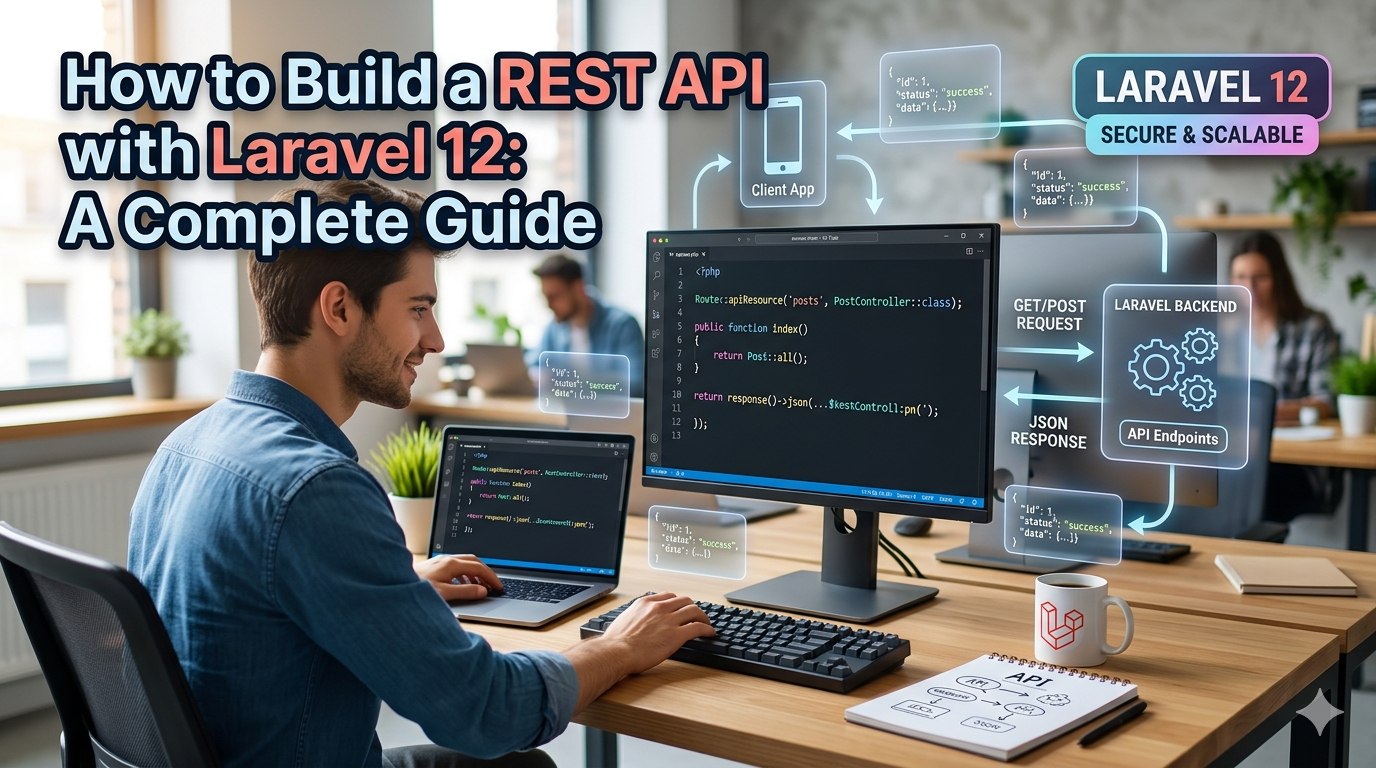
If you need to build a REST API quickly and reliably, Laravel is one of the best choices available today. It gives you a clean structure, built-in authentication, and tools that save hours of development time.
What is a REST API and Why Use Laravel for It?
A REST API allows two systems to communicate over HTTP. Your mobile app, frontend, or third-party service can request data from your backend and receive a structured JSON response.
Laravel is a popular choice for REST APIs because:
- It has built-in routing that maps directly to HTTP methods
- Eloquent ORM makes database queries readable and fast
- Laravel Sanctum handles API authentication out of the box
- Request validation is simple and powerful
What Makes Laravel 12 Different for API Development?
Laravel 12 brings a cleaner application structure, faster bootstrapping, and improved Eloquent performance. If you are starting a new project, Laravel 12 is worth using from the beginning.
How Do You Set Up a Laravel REST API?
Start with a fresh Laravel 12 installation:
composer create-project laravel/laravel my-api
cd my-api
php artisan serve
Setting Up Your Database
Update your .env file with your database credentials. Laravel supports MySQL, PostgreSQL, and SQLite out of the box.
Creating Your First API Route
Open routes/api.php and define your first route:
Route::get('/users', [UserController::class, 'index']);
Route::post('/users', [UserController::class, 'store']);
Route::get('/users/{id}', [UserController::class, 'show']);
Route::put('/users/{id}', [UserController::class, 'update']);
Route::delete('/users/{id}', [UserController::class, 'destroy']);
How Do You Handle Authentication in a Laravel API?
Install Laravel Sanctum for token-based authentication:
composer require laravel/sanctum
php artisan vendor:publish --provider="Laravel\Sanctum\SanctumServiceProvider"
php artisan migrate
How Do API Tokens Work in Laravel Sanctum?
When a user logs in, Sanctum generates a personal access token. This token is sent with every subsequent request in the Authorization header:
Authorization: Bearer your-token-hereYour protected routes use the auth:sanctum middleware:
Route::middleware('auth:sanctum')->group(function () {
    Route::get('/profile', [UserController::class, 'profile']);
});
What Are the Best Practices for Laravel API Development?
Always Validate Incoming Requests
Use Form Request classes to keep your controllers clean:
public function rules(): array
{
    return [
        'name'  => 'required|string|max:255',
        'email' => 'required|email|unique:users',
    ];
}
Return Consistent JSON Responses
Create a helper or use Laravel's built-in response methods:
return response()->json([
    'success' => true,
    'data'    => $user,
    'message' => 'User created successfully'
], 201);
Use API Resources for Transforming Data
Never return raw Eloquent models. Use API Resources to control exactly what data leaves your server:
php artisan make:resource UserResourceHow Do You Test a Laravel API?
Use Postman or Laravel's built-in HTTP testing tools. Write feature tests for every endpoint:
public function test_user_can_be_created()
{
    $response = $this->postJson('/api/users', [
        'name'     => 'John',
        'email'    => 'john@example.com',
        'password' => 'password123',
    ]);

    $response->assertStatus(201);
}
Is Laravel a Good Choice for Large-Scale APIs?
Yes. Laravel powers APIs for companies handling millions of requests daily. With proper caching using Redis, queue management, and database indexing, a Laravel API scales well under heavy load.
If you need a custom Laravel API built for your project, feel free to get in touch. HunarFlow specializes in building clean, well-documented REST APIs for web and mobile applications.
💡 Need help with this? Check out my related services:
Share this article